


Mindful eating habits are small, intentional shifts in how you approach food each day. They do not require a dramatic overhaul, a new diet plan, or hours of preparation. At their core, they ask one simple thing: slow down enough to be present with what you are eating. Research published in the journal Appetite found that people who eat with greater awareness report feeling more satisfied after meals and are less likely to reach for food out of boredom or habit. These five habits are easy to start, sustainable to keep, and genuinely change how food feels in your day.
In this article
- What does mindful eating actually mean?
- How do you start building a mindful eating habit at home?
- Why does the quality of your food matter for mindful eating?
- What role does your environment play in mindful meals?
- How can you make snack time feel intentional, not automatic?
- Frequently asked questions
What does mindful eating actually mean?
Mindful eating is not about restriction. It is about attention. The idea is borrowed from mindfulness meditation: rather than eating on autopilot while scrolling your phone or watching TV, you slow down and notice what you are actually experiencing. What does your food taste like? Are you genuinely hungry, or reaching for a snack out of habit? According to the Harvard T.H. Chan School of Public Health, mindful eating encourages you to tune in to physical hunger cues, eat more slowly, and appreciate the flavour and texture of your food. It is less about what you eat and more about how you eat it.
The reason this matters goes beyond any single health outcome. When we eat in a hurry or while distracted, we often miss the signals our body sends to tell us we are full. We also miss the pleasure of eating altogether. Mindful eating is, in a sense, an act of respect: for the food, for the people who made it, and for yourself. In a culture that celebrates busyness, choosing to actually taste your lunch is a quiet but meaningful act of resistance.

How do you start building a mindful eating habit at home?
The most effective starting point is a single meal or snack each day, chosen deliberately. You do not need to transform every eating moment at once. Pick one time of day, perhaps your afternoon snack or your lunch break, and treat it as a no-phone, no-screen experience. Sit down, serve your food on a plate or in a bowl, and take three slow breaths before you begin. That is genuinely all it takes to start.
Two simple shifts from behavioural nutrition research make a meaningful difference. First, never eat directly from a packet. Portioning your food onto a plate gives your brain a clearer cue for when the meal is finished. Second, put your food or utensil down between each bite. This sounds almost too simple, but it genuinely slows the pace of eating and gives your stomach time to catch up with your mouth. A 2014 review in Eating Behaviours found that slower eating is consistently associated with reduced energy intake and greater meal satisfaction.
Another useful ritual is pausing at the halfway point of your meal. Ask yourself whether you are still hungry. More often than you expect, you will find you are satisfied long before the plate is empty.
Why does the quality of your food matter for mindful eating?
When food is worth eating slowly, slowing down becomes natural. There is a reason people linger over a meal made with real ingredients and rush through a bag of highly processed snacks: one rewards your attention, the other is engineered to bypass it. Highly palatable processed foods are deliberately formulated to override satiety signals, which makes them difficult to eat mindfully almost by design.
Choosing food made from whole, recognisable ingredients is itself an act of mindfulness. It is a decision made in advance, before hunger strikes, that says: I want to feel good after I eat this. For snacking especially, what you keep in your pantry shapes the entire experience. A snack you can taste, identify, and appreciate naturally invites you to slow down. A snack that delivers a jolt of artificial flavour and then disappears does not.

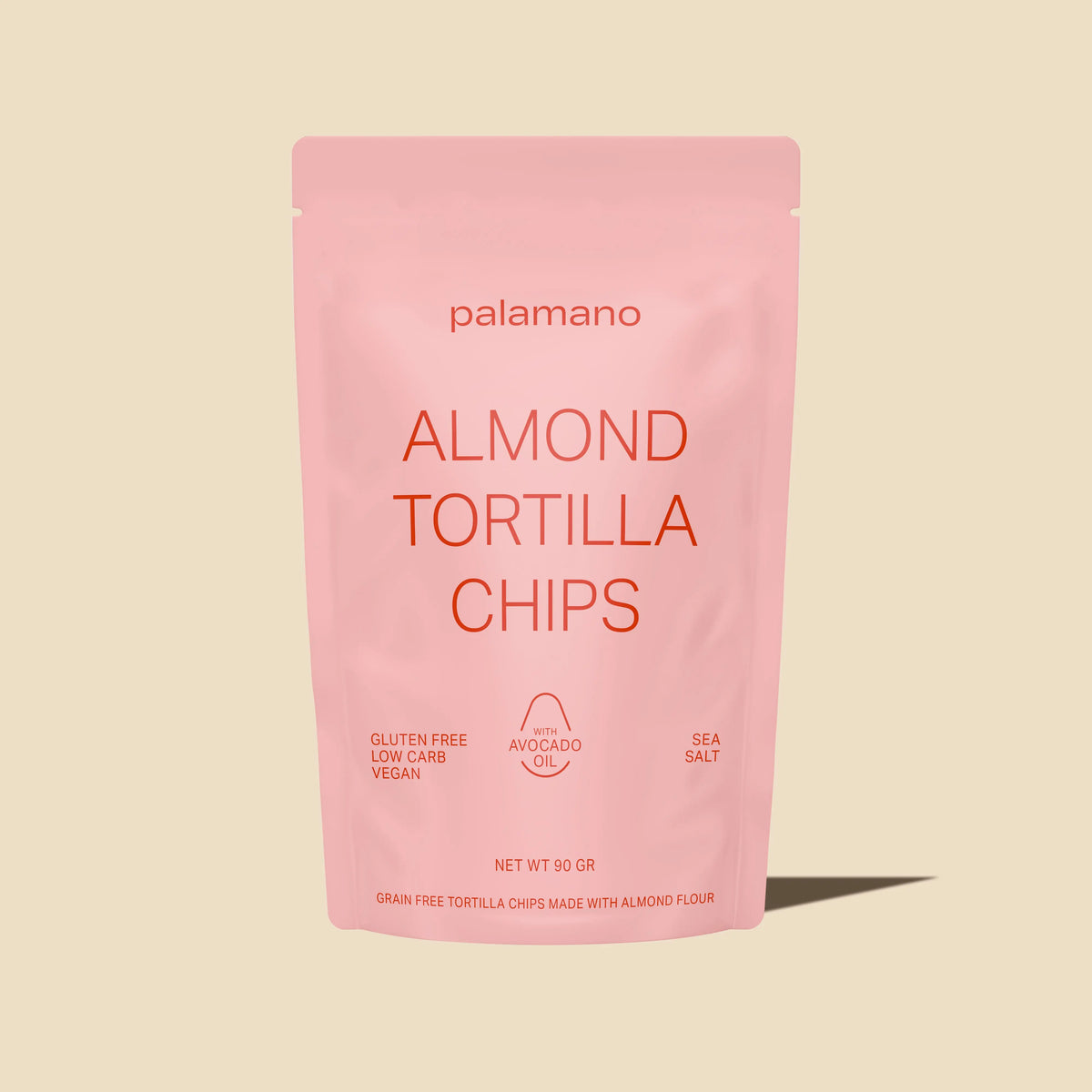
Three flavours of almond tortilla chips: sea salt, lemon lime, and cinnamon. Gluten-free, vegan, and made from real ingredients worth tasting slowly.
What role does your environment play in mindful meals?
Where and how you set up your eating space has a measurable effect on how you eat. Research from Cornell University's Food and Brand Lab found that environmental cues, including plate size, lighting, and background noise, influence how much we eat and how satisfied we feel afterwards. Soft lighting and reduced noise are associated with slower eating and greater enjoyment of meals. Even the visual contrast between your food and your plate affects how aware you are of portion size.
You do not need to rearrange your home to benefit from this. Small shifts matter. Clear your table of clutter before you sit down. Use a proper plate rather than eating from a container at your desk. If you eat with others, keep the conversation easy and the phones away. These small acts of environmental design make it easier for eating to be a genuine experience rather than a task to get through.
Many Australians who follow slow living principles describe the kitchen table as one of the most important spaces in their home. Not because it is decorated perfectly, but because it is protected: a place where the day actually pauses, even briefly, and where a meal is noticed rather than consumed.

Soft, flexible wraps made from cashew flour. Gluten-free, paleo, vegan, and low in carbohydrates. A more intentional base for any meal.

How can you make snack time feel intentional, not automatic?
Snacking is where mindful eating most often breaks down. Not because snacking itself is a problem, but because it tends to happen on autopilot. You reach into a packet while you work, finish it without fully noticing, and wonder later why you are still hungry or why that snack did not feel satisfying.
Making snack time feel intentional starts with a decision made before hunger arrives. Keep a small selection of snacks you genuinely enjoy and that leave you feeling well. When snack time comes, stop what you are doing. Serve your snack into a bowl. Sit somewhere other than your desk, even if only for five minutes.
Think of your afternoon snack as a proper break: a moment to step back from the screen, notice how your body feels, and give it something worth having. When the food itself is made with care, this shift is easier to make. There is something about a real ingredient, a flavour you can identify and appreciate, that invites you to slow down in a way that a highly processed snack simply does not.
This is not about being precious with food. It is about treating the small moments of the day as worth showing up for. Most of them are.
Frequently asked questions
What is the easiest mindful eating habit to start with?
The easiest starting point is removing screens from at least one meal or snack each day. Eating without distraction is the single habit most consistently supported by research as a way to increase meal satisfaction and reduce unintentional overeating. You do not need to change what you eat at all to begin here.
How long does it take to build a mindful eating habit?
Research on habit formation suggests most behaviours become automatic within around 66 days on average, though the range varies considerably by person and context. For mindful eating, the more useful frame is consistency over perfection: practising one intentional meal per day, even imperfectly, builds the habit faster than attempting to overhaul everything at once and giving up after a week.
Can mindful eating habits help with energy levels during the day?
Yes, indirectly. Mindful eating often leads to better food choices and more appropriate portion sizes, both of which support steadier blood sugar throughout the day. When you eat more slowly, your digestive system has more time to work efficiently. Many people who adopt mindful eating habits report fewer energy crashes in the afternoon, particularly when they also choose lower-sugar, higher-protein snacks.
Do the snacks I choose matter for mindful eating?
They matter more than most people expect. Highly processed snacks are often formulated to override satiety signals, making it harder to notice when you have had enough. Snacks made with whole ingredients tend to taste richer, fill you up more effectively, and reward slower eating. Choosing quality ingredients is itself a form of mindfulness: a decision made with intention, before autopilot kicks in.
Is mindful eating the same as intuitive eating?
They overlap but are not the same. Intuitive eating is a broader framework that includes rejecting diet culture and honouring hunger and fullness cues across all eating situations. Mindful eating is more specifically about the quality of attention during eating. The two approaches are compatible and are often practised together.
How do I stay mindful when eating with family or at social events?
You do not need to be perfectly mindful in every social eating situation. The goal is to build the awareness as a default, not a rule. In social settings, simply eating without your phone and following the pace of conversation naturally slows you down. Choosing food you actually enjoy and feel good about is often enough to keep you connected to the experience.
Ready to Start Snacking With More Intention?
The Palamano Mixed Box gives you the full range to try: almond and cashew tortillas plus tortilla chips, all made from real ingredients, gluten-free and vegan.
Shop Palamano →Free shipping on orders over $75 AUD


Leave a comment
This site is protected by hCaptcha and the hCaptcha Privacy Policy and Terms of Service apply.